

Rebel RBC03 Smart Balance Charger - LiPo, Li-Ion, NiMH, LiFe, HPA
Rebel RBC03 Smart Balance Charger - LiPo, Li-Ion, NiMH, LiFe, HPA
Out of stock
Notify Me About This Product
Couldn't load pickup availability
DETAILS
DETAILS
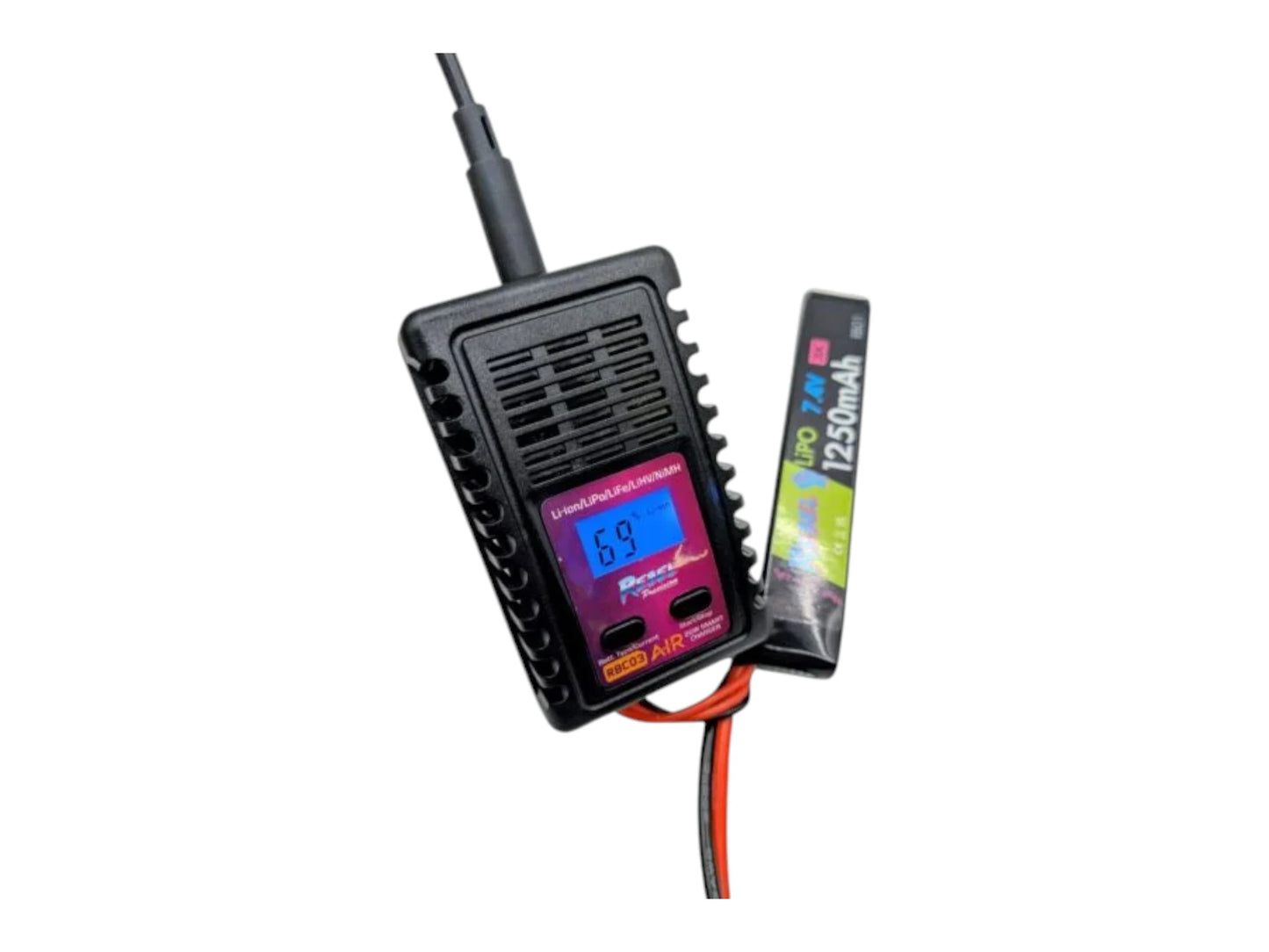
- description
Most players accumulate batteries faster than they mean to, and rarely all of the same type. A NiMH pack in an older gun, LiPos in the newer ones, maybe a LiFe or a micro HPA pack. Each traditionally wanting its own charger.
The RBC03 covers LiPo, Li-Ion, NiMH, LiFe and HPA packs on a single unit, balance-charging through the balance lead so every cell in a multi-cell pack comes up evenly. That balancing is not a luxury - it is what stops one weak cell dragging a LiPo out of shape and shortening its life.
It is the step up from a basic compact charger, mainly for the wider chemistry support, and it makes sense as soon as you are running more than one type of battery.
Specifications
| Specification | Detail |
|---|---|
| Type | Smart balance charger |
| Chemistries | LiPo / Li-Ion / NiMH / LiFe / HPA packs |
| Balancing | Per-cell, through the balance lead |
| Use | AEG and HPA battery packs |
| Brand | Rebel |
Good to know before you buy
Select the correct chemistry before you start - charging a pack on the wrong setting is the fastest way to ruin it. Charge on a non-flammable surface inside a safety sack, and stay in the room.
Frequently asked questions
Why does balance charging matter?
In a multi-cell pack the cells drift slightly out of step over time. Balance charging brings each one up individually so they stay matched, which keeps capacity and lifespan where they should be.
How is it different from the RBC01 Pro?
The RBC03 adds Li-Ion support and covers five chemistries in total, making it the better choice for a mixed collection. The RBC01 Pro is smaller and simpler, with switchable AEG and HPA charge currents.
Can it charge my old NiMH packs?
Yes. NiMH is one of the five supported chemistries, so older stick and nunchuck packs are covered alongside modern LiPos.
Do I have to set the chemistry manually?
Yes, and it matters. Always confirm the setting matches the pack before starting - a LiPo charged on the wrong profile can be damaged or become unsafe.
Is it safe to leave running?
No charger should be left unattended with a LiPo connected. Charge in a safety sack, on a hard non-flammable surface, while you are there.
