


Earmor S20 Bone Conduction Throat Microphone
Earmor S20 Bone Conduction Throat Microphone
In stock
Notify Me About This Product
Couldn't load pickup availability
DETAILS
DETAILS

- description
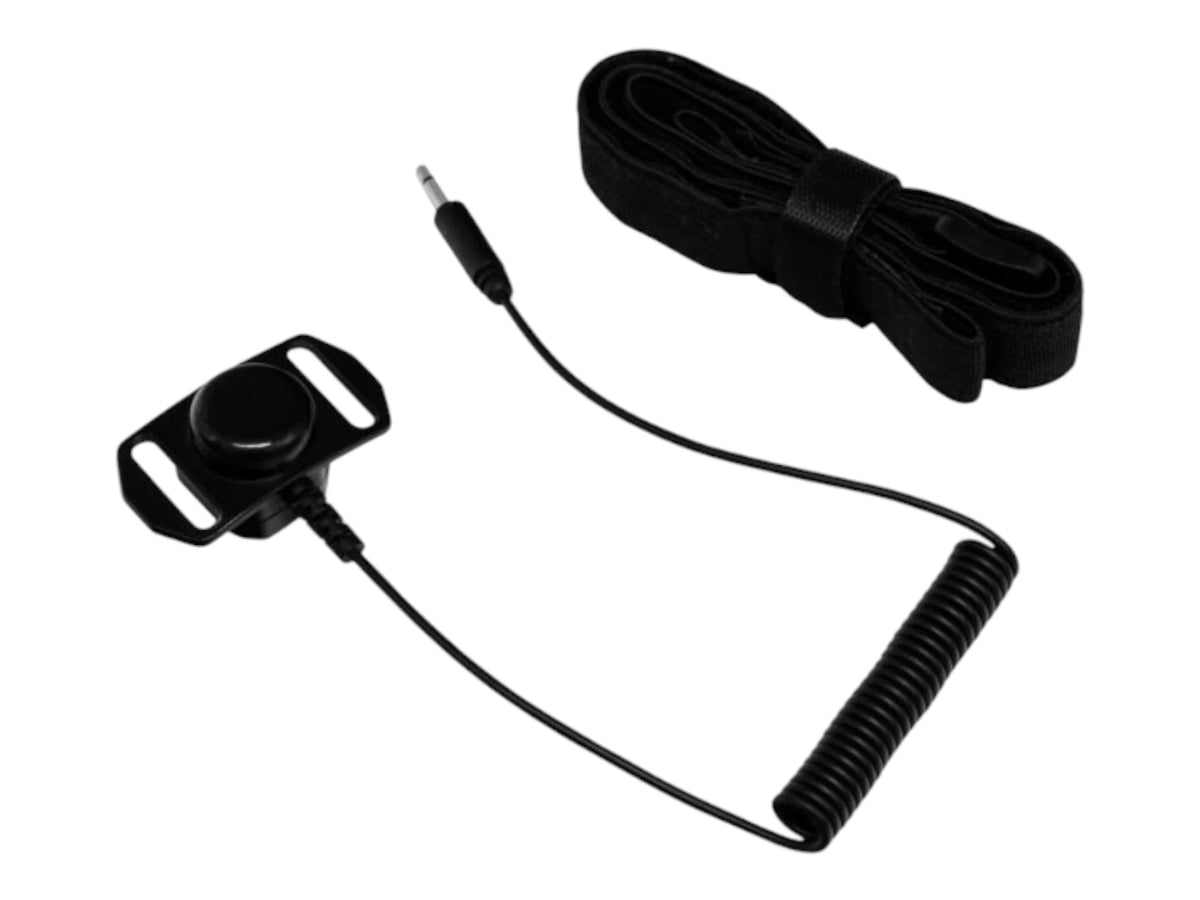
A boom microphone hears everything that reaches it, which is fine in a quiet wood and useless inside a building where three people are firing. A throat microphone works from the other end of the problem: the pickup sits against the neck and reads vibration directly from the vocal cords, so ambient noise is simply not in the signal path. Earmor's own three claims for it are high noise resistance, high invisibility and a secure fit.
The practical effect is that you can speak quietly — or hoarsely, through a respirator, or with a full-face mask on — and still come through clearly on the net.
It is also close to invisible. There is no arm across the face, nothing to catch on a stock weld or a mask seal, and nothing sticking out of a helmet silhouette.
Earmor list it for the M32, M32H, M32X and M32N, on both their product page and in the 2026 catalogue.
Specifications
| Specification | Detail |
|---|---|
| Type | Bone conduction throat microphone |
| Compatibility | M32, M32H, M32X, M32N (Earmor product page and 2026 catalogue) |
| Noise resistance | High — pickup is vocal cord vibration, not ambient air |
| Profile | High invisibility, no facial obstruction |
| Fit | Secure neck strap |
| Manufacturer part number | S20 |
| Brand | Earmor |
Frequently asked questions
Does it sound as good as a boom mic? Different rather than better. Throat mics trade a little tonal richness for immunity to background noise. In a quiet wood a boom wins; in a CQB building the throat mic wins outright.
Can I wear it with a full-face mask? Yes, and that is one of the main reasons to buy one. The pickup sits below the mask seal entirely.
Does it replace the headset or work with it? It works with it. The M32 Plus or M32X Plus still does the listening; the S20 replaces the transmit side.
Do I still need a PTT? Yes. The throat mic feeds the headset; a PTT such as the M52 keys the radio.